
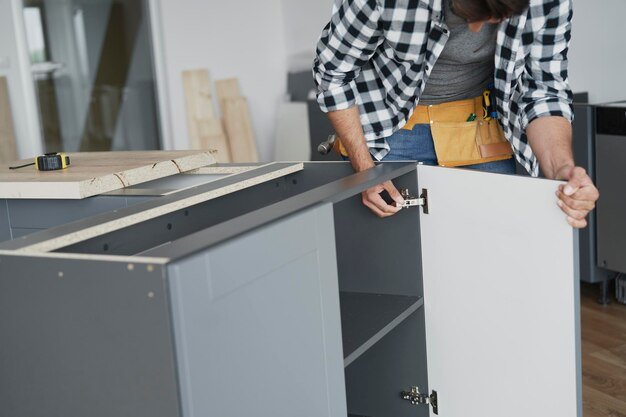
Anyone who’s lived in a Bondi apartment or a Surry Hills terrace knows the pain: gorgeous character, great location, and a bedroom closet the size of a phone booth. Storage is one of the biggest frustrations we hear about from Eastern Suburbs homeowners, and it’s also one of the easiest things to fix properly — if you go about it the right way.
Built-in wardrobes are one of the jobs we get asked for most at French Artisanal Carpentry. This guide covers what your options actually are, what to expect from each, and why the cheap flat-pack option isn’t always the bargain it looks like.
Built-In vs Flat-Pack vs Walk-In: What’s the Difference?
There are three main paths when you’re upgrading wardrobe storage, and each suits a different budget and home:
| Type | Best For | Relative Investment | Lifespan |
|---|---|---|---|
| Flat-pack / off-the-shelf | Standard-sized rooms, tight budgets | Budget-friendly | 5–10 years |
| Custom built-in | Odd-shaped rooms, sloped ceilings, older homes | Mid-range | 20+ years |
| Walk-in robe | Larger bedrooms, master suites | Higher investment | 20+ years |
Flat-pack wardrobes are fine if your room is a perfect rectangle with standard ceiling heights. The problem is that a huge number of homes in Redfern, Chippendale, Darlinghurst and the older parts of the Eastern Suburbs simply aren’t built that way — slightly bowed walls, angled ceilings, chimney breasts eating into the corner of the room. A custom built-in wardrobe is measured and built to fit your actual room, gap-free, rather than being forced into a space it was never designed for.
What Affects the Cost of a Built-In Wardrobe?
Pricing for a standard built-in wardrobe (roughly 2–3 metres wide, floor to ceiling) varies quite a bit from job to job, mainly depending on:
- The size and configuration (sliding vs hinged doors, number of shelving/hanging sections)
- Materials and finish (melamine, laminate, or veneer)
- Hardware quality (soft-close hinges and runners cost more but last significantly longer)
- Whether the room needs any prep work first (uneven walls, old skirting removal, patching)
Mirrored sliding doors typically add a bit more to the cost but are popular in smaller Eastern Suburbs bedrooms because they help a room feel bigger — a small trick that makes a real difference in a lot of the more compact apartments around Zetland and Eastlakes.
Materials and Finishes Worth Knowing About
You don’t need to become a joinery expert, but a few terms are worth understanding before you get quotes:
- Melamine board — the most common, cost-effective option. Durable, wipeable, comes in a huge range of colours and finishes.
- Veneer — a thin layer of real timber over a board core. Looks more premium, costs more, needs slightly more care.
- Soft-close hinges and runners — worth the small extra cost. No slamming doors, less wear over time, and honestly just feels nicer to use every day.
- Adjustable shelving — lets you reconfigure the inside of the wardrobe as your storage needs change (kids growing up, wardrobe becoming a home-office nook, etc.).
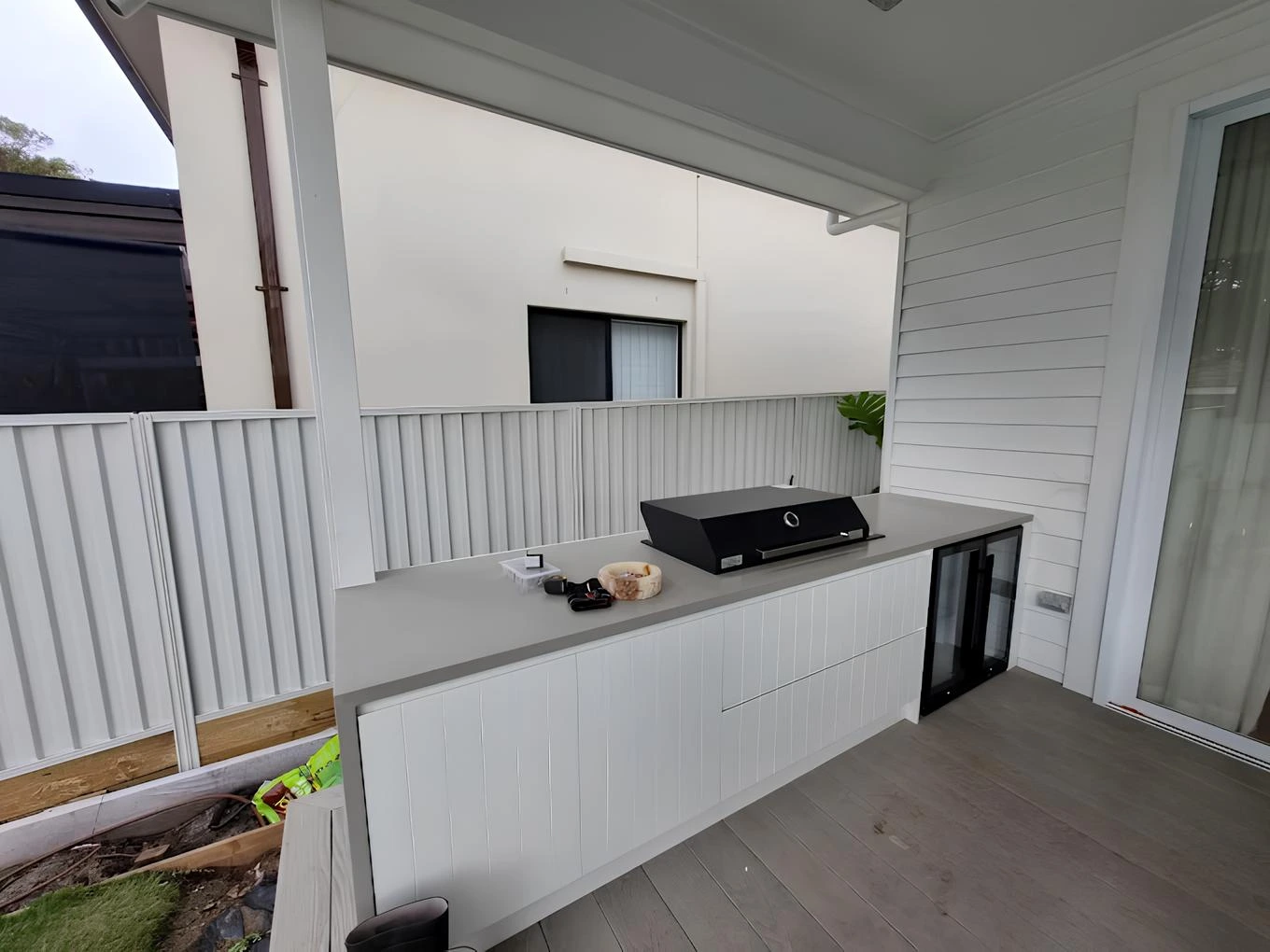
Custom joinery finish — the same attention to detail we bring to built-in wardrobes.
Making the Most of Awkward Spaces
This is where custom carpentry really earns its keep. Some of the trickiest (and most satisfying) jobs we’ve done have involved:
- Building storage into the eaves of a sloped-ceiling attic bedroom
- Fitting a wardrobe around an existing chimney breast or structural column
- Adding ventilation to a wardrobe built against an external wall to prevent damp and mould — a real issue in some older Eastern Suburbs homes close to the coast
- Converting an awkward alcove or under-stair space into fully functional hanging and shelf storage
One client, Jodi, came to us with exactly this kind of tricky brief:
“What a wonderful service! Warren managed to achieve a tricky solution with ease. He expertly recrafted our drawer to allow for ventilation. He worked so neatly and expertly that I requested another much more complicated job. Warren declined the job knowing that he might not be able to execute it to his exacting standards. I appreciate his honesty and integrity as much as his expertise.” — Jodi Sher
That honesty matters more than it sounds — a good carpenter tells you when something isn’t the right fit, rather than taking the job anyway.
Frequently Asked Questions
How long does it take to install a built-in wardrobe?
A standard built-in wardrobe usually takes one to three days on-site, once measurements and materials are finalised. Larger walk-in robes or multiple wardrobes in one job can take a week or more.
Can built-in wardrobes be retrofitted into older homes?
Yes — this is actually one of the main reasons to go custom rather than flat-pack. We measure the actual room (including any lean, slope or irregularity) and build the wardrobe to fit it exactly, which flat-pack systems generally can’t do.
Is it cheaper to buy a flat-pack wardrobe instead?
Upfront, yes. Over the life of the wardrobe, often not — flat-pack hardware wears out faster, and if it doesn’t fit your room properly you’re left with gaps that collect dust and look unfinished.
Can you match a new wardrobe to existing joinery in the house?
In most cases, yes. We can match colours, finishes and hardware styles to existing cabinetry so the new wardrobe looks like it was always part of the home.
Do you install soft-close doors and drawers?
Yes, soft-close hinges and drawer runners are available on all our custom wardrobes and are something we’d genuinely recommend — it’s a small cost difference for a noticeably better day-to-day experience.
Ready to Sort Out Your Storage?
If your current wardrobe situation is more frustrating than functional, it’s worth getting a custom option measured up — even awkward, sloped or oddly-shaped rooms can usually be fitted properly. We build custom wardrobes and cabinetry for homes across Bondi, Paddington, Woollahra, Coogee, Kensington and the wider Eastern Suburbs.
Get in touch for a free measure and quote, or call Warren on 0401 739 027.